
Seville Guide 2026: What to See, Tapas Bars, and the Neighbourhoods You Can't Miss
Seville is a city you don’t visit just once. People go back. For the smell of orange blossom in spring, which drifts into any street without warning. For the tapas in Triana. For the light that at seven in the evening turns the Cathedral stone into something golden. Seville is the capital of Andalusia and you can tell: centuries of history live here in layered strata — Romans, Visigoths, Muslims, Christians — and the city has made that mix its identity.
Don’t try to see everything in one weekend. Seville doesn’t work with checklists. It works with long walks, stops at terrace bars, and plans that go off course for the better. That said, there are things you can’t skip.
What to See in Seville: The Essentials
1. Seville Cathedral and the Giralda
The Cathedral of Saint Mary of the See is the largest Gothic cathedral in the world and the third-largest Christian temple after St Peter’s in the Vatican and St Paul’s in London. Construction began in 1401 on the site of the former Great Mosque of Seville.
- The Giralda: The former minaret of the Almohad mosque is now the cathedral bell tower and the quintessential symbol of Seville. Climbing to the top of the Giralda (via its 35 ramps, designed so horses could be ridden up) offers the best panoramic views of the city.
- The Patio de los Naranjos: A haven of peace that preserves the layout of the mosque’s original ablutions courtyard.
- The tomb of Christopher Columbus: Inside the cathedral stands the imposing mausoleum of the explorer.
2. The Royal Alcázar
The Royal Alcázar of Seville is a walled palatial complex blending different architectural styles, predominantly Mudéjar and Renaissance. It is the oldest royal palace still in use in Europe. Its intricate stucco work, its colourful tiles, and its lush gardens will transport you to another era. Don’t miss the Palace of Peter I and the Baths of Doña María de Padilla.
3. Plaza de España and María Luisa Park
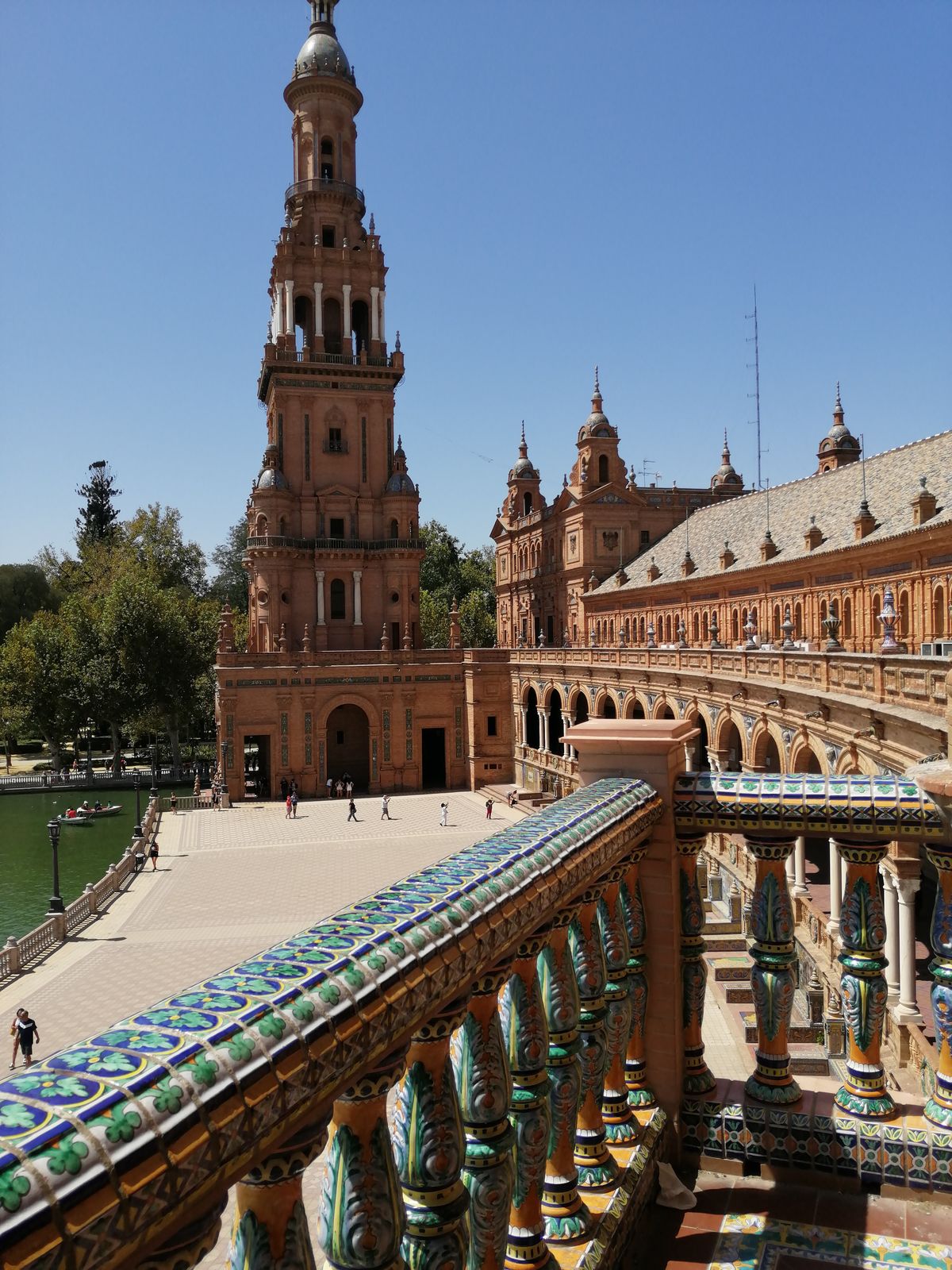
Built for the Ibero-American Exposition of 1929, Plaza de España is one of the most spectacular squares in Spain. Its semicircular shape embraces visitors and its tiled benches represent every Spanish province. You can take a boat ride along its canal or simply admire its imposing architecture.
Next to the square lies María Luisa Park, Seville’s green lung. It is the perfect place to stroll in the shade of centuries-old trees, discover hidden gazebos, and enjoy a moment of relaxation.
4. The Santa Cruz Neighbourhood
The former Jewish quarter of Seville is a labyrinth of narrow streets, hidden squares, and whitewashed houses with flower-filled courtyards. Getting lost in the Santa Cruz neighbourhood is the best way to feel the city’s pulse. Highlights include the Plaza de Doña Elvira, the Callejón del Agua, and the Plaza de Santa Cruz.
5. Triana and the Guadalquivir River
Crossing the iconic Puente de Isabel II (known as the Triana Bridge), you reach the neighbourhood of Triana, cradle of bullfighters, flamenco singers, and potters. Triana has its own identity and a very special atmosphere.
- Calle Betis: Offers unbeatable views of the city and is lined with bars and terraces.
- Triana Market: Ideal for tasting local produce and experiencing neighbourhood life.
- Torre del Oro: Located on the opposite bank, this 13th-century watchtower once defended the city’s port. Today it houses the Naval Museum.
6. Las Setas de Sevilla (Metropol Parasol)
For a contrast to historic Seville, visit Las Setas de Sevilla in Plaza de la Encarnación. This immense wooden structure, the largest of its kind in the world, offers a spectacular panoramic viewpoint, especially recommended at sunset.
Gastronomy: What to Eat in Seville
Seville is a tapas paradise. Going for tapas isn’t just about eating: it’s about socialising, changing bars, ordering a small beer, and seeing what they serve.
- Gazpacho and Salmorejo: Cold soups perfect for beating the heat.
- Pescaito frito: Especially in the bars of Triana and Los Remedios.
- Spinach with chickpeas: A classic of Sevillian cuisine with Andalusí origins.
- Montadito de pringá: A small sandwich filled with meats from the stew pot.
- Carrillada ibérica: Tender, meltingly soft braised Iberian pork cheek.
Tapas areas: The Santa Cruz neighbourhood, Triana, the Alameda area, and the streets around Plaza del Salvador are excellent choices.
When to Visit Seville
The best times are spring (March to May) and autumn (September to November). The climate is pleasant and the city is at its finest.
- Spring: It’s high season. The city smells of orange blossom and hosts both Holy Week and the April Fair — the city transforms, for better and for traffic, during these weeks.
- Summer: July and August are extremely hot, frequently surpassing 40°C. If you come in summer, do your sightseeing early or at sunset. In between, siesta. As the locals do.
- Autumn and winter: Mild and pleasant, ideal for cultural tourism without the crowds.
Getting Around Seville
Seville’s historic centre is very walkable and strolling is the best way to discover its charms. For longer distances, the city has a good urban bus network (TUSSAM), a metro line, and the tram (Metrocentro). Seville also boasts an excellent network of cycle lanes (SEVici).
Final Tips
- Book in advance: Especially for the Alcázar and the Cathedral, as queues can be very long.
- Enjoy a flamenco show: Seville is one of the cradles of flamenco. Attending a tablao in Triana or Santa Cruz is an unforgettable experience.
- Embrace the street life: Life in Seville happens outdoors. Join the locals on the terraces and soak up the atmosphere.
Seville is a city you end up returning to. The first time you remember it for the monuments. The second, for the bars. The third, for the light.
If you’re completing a route through Andalusia, the guides to Córdoba (45 minutes by AVE), Granada, and Cádiz are the natural next steps.
Frequently Asked Questions
How many days do I need to see Seville? Two full days for the main sights (Cathedral, Alcázar, Plaza de España, Santa Cruz, and Triana). Three if you want to take it easy and add Las Setas and María Luisa Park.
Is the Alcázar worth it, or is it too touristy? It’s touristy because it’s good. Admission costs €15.50 but book online at least a couple of weeks ahead. If you’re an EU citizen, entry is free on Mondays from 4:00 pm to 5:00 pm (booking still required).
Where should I stay in Seville? The centre (Cathedral-Alfalfa area) is the most practical but noisy. Triana is quieter and more authentic, across the river but a ten-minute walk from the centre. El Arenal is a good middle ground.