
Málaga Guide: Museums, Beaches, the Alcazaba, and Where to Eat on the Costa del Sol
Málaga has undergone a transformation in the last twenty years. It used to be mainly the gateway to the Costa del Sol and the place where you rented a car to go to Torremolinos. Now the city competes with Madrid and Barcelona in museums: the Picasso, the Thyssen, the Pompidou, the CAC. It has three hundred days of sunshine a year, an alcazaba that is the Alhambra’s little sister, beaches a fifteen-minute walk from the centre, and a cuisine that revolves around sardine skewers and fried fish. If you had told me ten years ago that Málaga would be one of Spain’s leading cultural destinations, I wouldn’t have believed it. Now it makes sense.
The Historic Centre: A Walk Through History
The heart of Málaga is pedestrianised, elegant, and full of life at any time of day. Strolling along the iconic Calle Larios, the city’s main shopping artery, is the ideal starting point.
The Cathedral of the Incarnation (La Manquita)
Málaga Cathedral, built on the former main mosque, is one of the gems of the Spanish Renaissance, though it also features Baroque elements. It is affectionately known by locals as “La Manquita” because one of its two main towers was left unfinished due to lack of funds. The interior is majestic, with highlights including the impressive choir stalls and its gardens.
The Alcazaba and Gibralfaro Castle
Málaga boasts one of the most impressive defensive monumental complexes in Spain:
- The Alcazaba: This 11th-century Muslim palace-fortress, built on the slopes of Mount Gibralfaro, is the Alhambra’s little sister. Its courtyards, gardens, and fountains are an oasis of peace in the middle of the city, offering lovely views of the port and the centre. At its feet lies the Roman Theatre, which integrates perfectly with the fortress, showcasing the layering of cultures in the city.
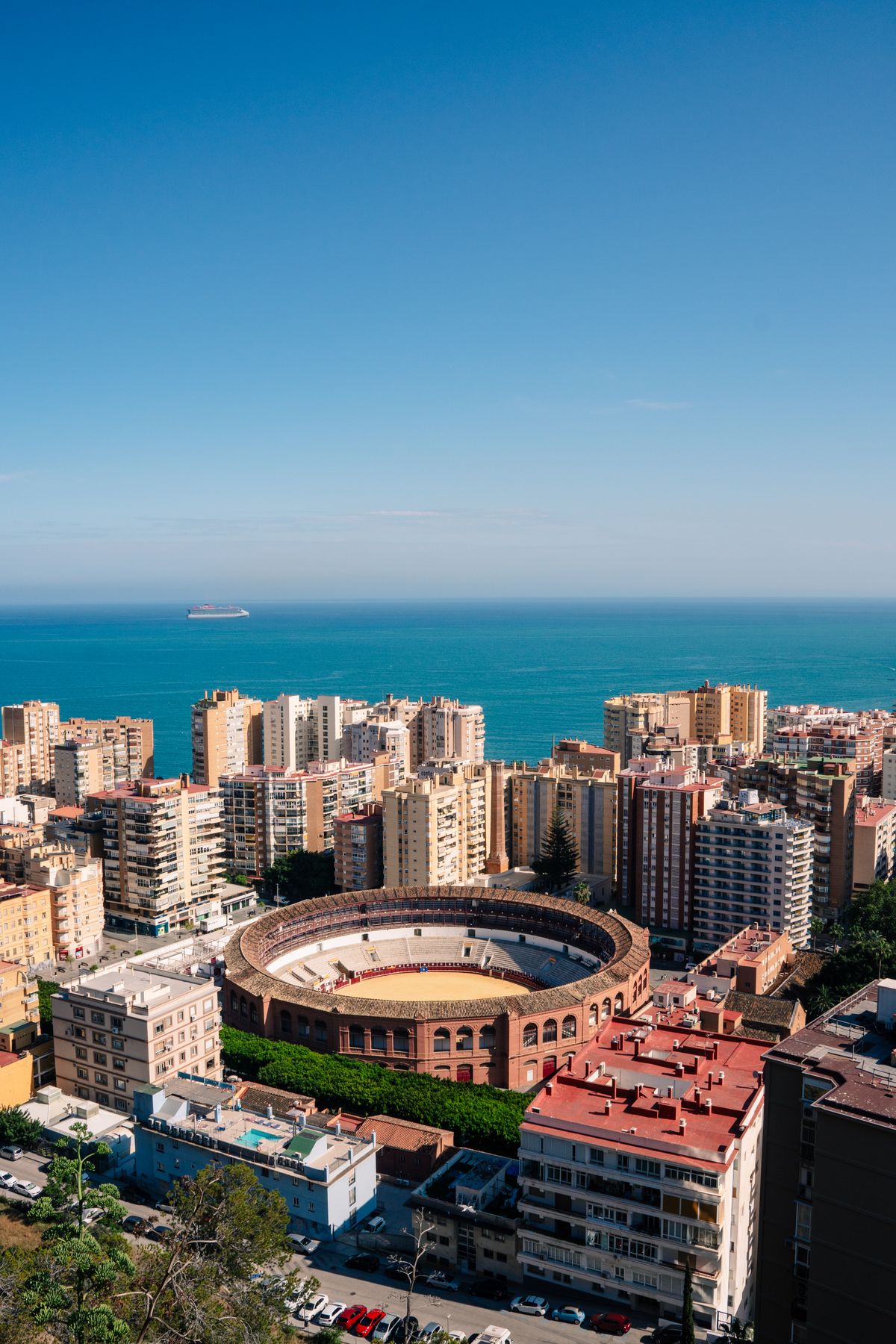
- Gibralfaro Castle: Built in the 14th century to protect the Alcazaba and house the troops. The winding sentry path up to the castle has its reward: the best panoramic views of the whole of Málaga, including the famous La Malagueta bullring.
Málaga, City of Museums
Nowadays, Málaga is synonymous with culture. The city is home to more than three dozen top-tier museums:
- Museo Picasso Málaga: Located in the beautiful Palacio de Buenavista, it houses an extensive collection of works spanning all the creative periods of the Malaga-born genius.
- Casa Natal de Picasso: Located in the central Plaza de la Merced, it offers insight into the painter’s early years and the family environment in which he grew up.
- Centre Pompidou Málaga: The first branch of the Parisian museum outside France. Its unmistakable multicoloured glass “Cube” has become an icon of the port. It houses an excellent collection of modern and contemporary art.
- Museo Carmen Thyssen: Housed in the Palacio de Villalón, it focuses on 19th-century Spanish and Andalusian painting, with an emphasis on costumbrismo.
- CAC Málaga (Contemporary Art Centre): Free entry, it is a benchmark for avant-garde art in Spain, located in the former Wholesale Market building.
The Port and the Beach
The city has opened up to the sea thanks to the recent redevelopment of its port area.
- Muelle Uno and the Palmeral de las Sorpresas: This seafront promenade is an ideal place to walk, enjoy its terraces, restaurants, designer shops, and admire the moored yachts, all under the shade of a modern palm grove with the profile of the historic city in the background.
- La Malagueta Beach: Just a few minutes’ walk from the centre, this extensive urban beach is the perfect spot to relax, take a dip in the Mediterranean, and, of course, enjoy the local cuisine.
Gastronomy: The Taste of the Sea and the Land
Eating in Málaga is a celebration. Malaga cuisine is based on fresh produce from the sea and its fertile hills.
- Espetos de Sardinas: The undisputed king of Malaga’s beaches. Sardines skewered on canes and grilled over hot coals (traditionally in boats filled with sand) at the chiringuitos of Pedregalejo or El Palo.
- Pescaíto Frito: Anchovies, squid, mullet, baby squid… Always fresh and fried to perfection.
- Ajoblanco and Porra Antequerana: The perfect cold soups for the Andalusian summer. Porra is thicker and is served with tuna, hard-boiled egg, or Iberian ham.
- Sweet Málaga Wine: A must-stop at the historic El Pimpi bodega, a city institution, to taste a glass of sweet Cartojal wine.
When to Visit Málaga
Thanks to its subtropical Mediterranean climate, Málaga is an ideal year-round destination.
- Spring and Autumn: Temperatures are perfect for sightseeing, combining beach and museums, and strolling around.
- Summer: Very hot, ideal if your main goal is the beach and enjoying the vibrant nightlife. The Málaga Fair in August is a spectacular event (don’t forget to look for the famous biznagas!).
- Winter: Winters are very mild, making it the perfect refuge from the cold. At Christmas time, the lighting on Calle Larios is famous throughout Europe.
Málaga has it all: history, museums, beach, and bars where the tapa is still generous. It isn’t the most monumental city in Andalusia, but it’s one of the best to experience.
If you want to continue your route, the Granada guide is an hour and a half by car, Córdoba is an hour by AVE, and Almería is two hours to the east.
Frequently Asked Questions
How many days do I need for Málaga? Two full days for the historic centre, the Alcazaba, Gibralfaro, and a couple of museums. Three if you want to add a beach day at the chiringuitos in Pedregalejo.
Is Málaga worth it if I already know Granada and Seville? Yes. It’s a different experience: less monumental, more street life, museums, and beach. All three together form a triangle that covers the diversity of Andalusia well.
Is it safe to swim at La Malagueta beach? Yes. It’s an urban beach with all the facilities. If you’re looking for more natural beaches, those in the eastern province (Nerja, Maro) are better.