
Jaén Guide: Úbeda, Baeza, the Sierra de Cazorla, and the Olive Groves
Jaén is probably the least known and most undervalued Andalusian province. Mass tourism has ignored it for decades, perhaps because it has no coastline, perhaps because it has no Alhambra or Mosque that appears on every list of world wonders. Anyone who doesn’t go to Jaén misses out on the most compact and best-preserved Renaissance ensemble in Spain, the largest natural park in the country, and a capital city with a castle on a hill that cuts the horizon like a film set.
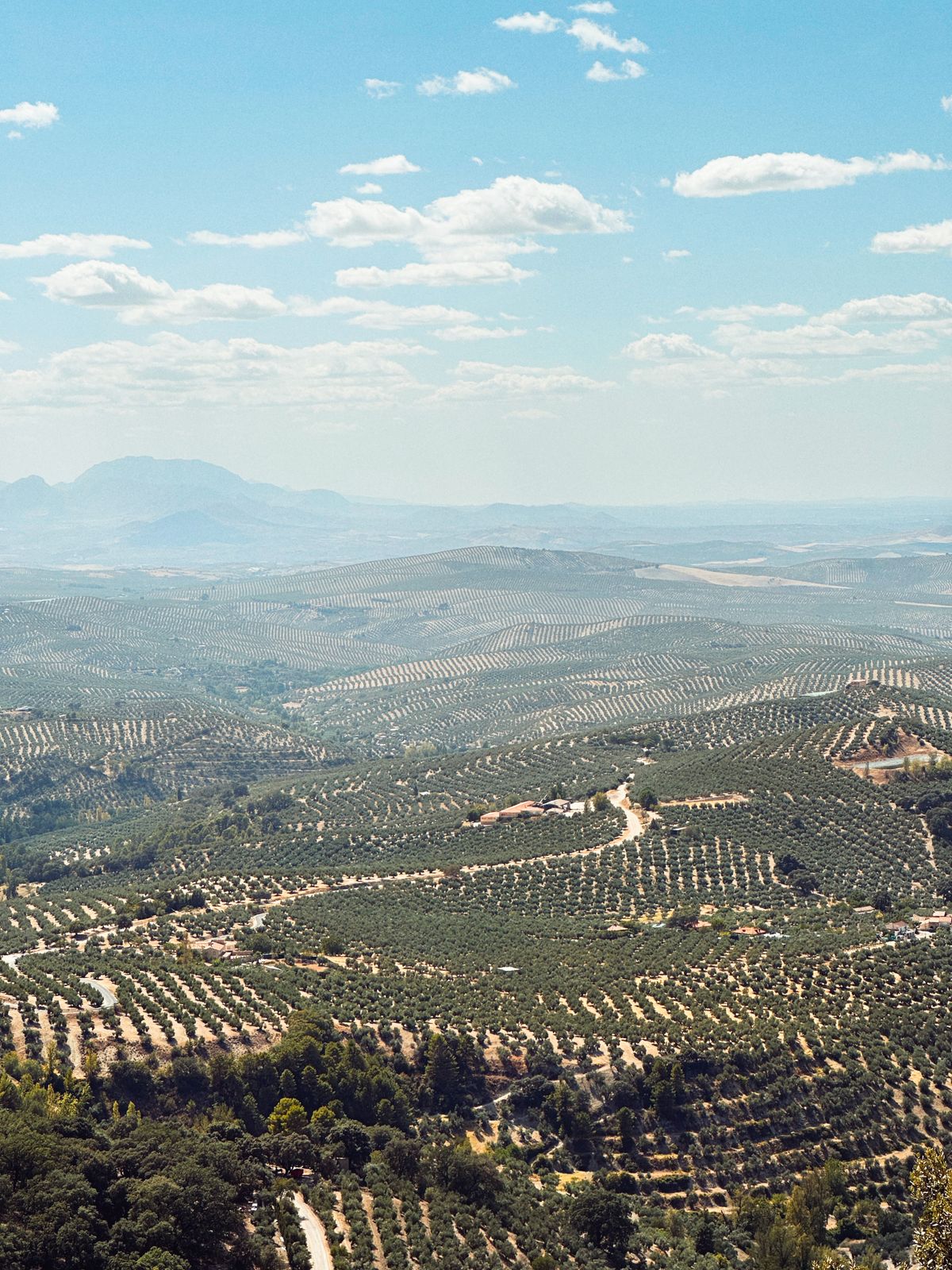
It is also the province of olive oil. Jaén produces twenty percent of the world’s olive oil. That means one in every five bottles of olive oil consumed on the planet comes from this province. And the landscape reflects it: sixty-six million olive trees cover the territory in an endless mosaic of silvery green that some call the olive sea.
Úbeda and Baeza: The Andalusian Renaissance
Úbeda and Baeza, just nine kilometres apart, have shared the UNESCO World Heritage designation since 2003. They are the two jewels of the Spanish Renaissance outside Italy.
The history of these two towns in the 16th century is a perfect example of how a local elite with money and ambition could transform two rural towns into top-tier artistic centres. The Molina family and the Cobos family, both personal secretaries to Charles V, invested their fortunes in bringing the best architects of the era: Andrés de Vandelvira first and foremost, but also Diego de Siloé and Alonso de Berruguete.
Úbeda is dominated by the Plaza Vázquez de Molina, a rectangular space that concentrates four buildings in a masterclass of Renaissance urban planning. The Sacra Capilla del Salvador, designed by Vandelvira in 1540, has a Plateresque façade that rivals the finest doorways in Salamanca. It’s practically the Escorial before the Escorial, funded by Francisco de los Cobos as a family pantheon. Inside, the main chapel screen is by Francisco de Villalpando, the finest metalworker of the Spanish Renaissance.
Opposite the Chapel stands the Palacio de las Cadenas (now the Town Hall), also by Vandelvira, with a loggia of Corinthian columns reminiscent of Florentine palaces. And next door, the Colegiata de Santa María de los Reales Alcázares, a church built on a mosque that was itself built on a Roman temple. Three layers of history perfectly visible if you know where to look.
Baeza is smaller but just as beautiful. The Plaza de Santa María brings together the Cathedral (a former mosque consecrated in 1227), the Fuente de Santa María (which is Renaissance in style but looks Baroque due to its accumulation of decorative elements), and the Casas Consistoriales Altas, a Plateresque palace with corner balconies that is one of the great achievements of Andalusian civic architecture.
The Cathedral of Baeza has something remarkable: a silver monstrance over two metres tall, the work of the silversmith Gaspar de Ledesma, processed every year during the Corpus Christi festival. If you coincide with the date, it’s worth it. If not, the monstrance is on display in the cathedral museum.
Baeza has a university life that Úbeda lacks — the University of Baeza operated between the 16th and 19th centuries, and Antonio Machado taught French here. The Aula de Machado, in the old university building, preserves the classroom exactly as it was when the poet taught there.
For eating, tapas in both towns are generous. In Úbeda, Calle Real is lined with characterful bars. In Baeza, Calle San Francisco and the streets around Plaza del Pópulo. The local specialities are pipirrana (a salad of tomato, green pepper, spring onion, and hard-boiled egg with a generous splash of local olive oil) and andrajos (a pasta stew with salt cod, red pepper, and tomato).
The Capital: Jaén City
Jaén capital is a city that climbs a hill and doesn’t come down. The Castillo de Santa Catalina crowns the hilltop and is the silhouette that identifies the city from miles away. It dates from the Almohad period but was heavily remodelled by Ferdinand III after the conquest of 1246. Today it houses a parador nacional, one of the few with three-hundred-and-sixty-degree views: to the west, the olive sea stretching to the vanishing point; to the south, the Sierra Nevada cutting the horizon; and to the north, the Sierra de Cazorla.
The Cathedral of Jaén is one of the most ambitious buildings of the Spanish Renaissance. Vandelvira (him again) designed a cathedral that would serve as the model for the cathedrals of the Americas: a hall church plan — all three naves at the same height — with free-standing Corinthian pillars and sail vaults. The main façade is Baroque, added by Eufrasio López de Rojas in the 17th century, with a monumentality that more than compensates for the ornate aesthetic.
The Arab Baths of Jaén, in the basement of the Palacio de Villardompardo, are the largest and best-preserved in Spain after those of the Alhambra. Built in the 11th century, they have the three classic rooms — cold, warm, and hot — covered with barrel vaults pierced by star-shaped skylights that create an almost theatrical play of light. Entry is free for EU citizens.
The Sierra de Cazorla, Segura y Las Villas
The Natural Park of the Sierras de Cazorla, Segura y Las Villas is the largest protected area in Spain — over two hundred thousand hectares — and one of the great forest lungs of the peninsula. This is where the Guadalquivir River is born, the great river of Andalusia that runs through the region until it reaches the sea at Sanlúcar de Barrameda, in Cádiz.
The park is ideal for hiking, cycling, horse riding, and wildlife spotting. There are red deer, fallow deer, mouflon, wild boar, and a stable population of bearded vultures successfully reintroduced in recent years.
The most classic excursion is the source of the Guadalquivir, near the hamlet of Coto Ríos. Don’t expect a waterfall or anything spectacular: it’s a jet of water that springs from the rock. But there is something moving about being at kilometre zero of the river that strings an entire region together.
The Tranco Reservoir is the largest inland lake in Andalusia (in summer, when it’s full, it looks like an improvised fjord between the mountains). You can tour it by boat during the summer months. In the centre of the reservoir lies the Cabeza de la Viña Island, a peninsula that becomes an island when the water level is high, with an early 20th-century hydroelectric power station that looks like a Tuscan villa.
For accommodation in the mountains, Cazorla is the reference town, with a historic centre of steep streets, a ruined medieval castle at the top, and a Plaza de Santa María with bars that in summer are packed until the early hours.
Olive Oil: Jaén’s Identity
You cannot talk about Jaén without talking about olive oil. The province produces more extra virgin olive oil than the whole of Greece. The reigning variety is the picual, an olive that yields an intensely green oil with a fruity flavour reminiscent of tomato vine and fig, and a slight final peppery kick in the throat that connoisseurs call “noble bitterness.”
Many olive mills offer tours with tastings. Hacienda Guzmán Mill (Fuente de Piedra) and Nobleza del Sur Mill (Arjona) are two good options. The visit includes an explanation of the milling process, a walk through the olive groves, and a guided tasting where you learn to distinguish varieties and defects.
In November and December, during the harvest season, the landscape fills with vareadores — the workers who vibrate the olive branches to make the olives fall — and the air smells of freshly milled olive oil. If you’ve never been to Jaén at harvest time, that’s the moment to go.
When to Visit Jaén
Jaén works in every season, but each one for a different type of trip:
- Autumn (October–November) : the best time for olive oil. It’s the harvest season and the mills are running at full capacity. The landscape has a particular golden colour.
- Spring (March–May) : ideal for Úbeda and Baeza. The weather is perfect for walking and the terraces start to open. It’s also a good time for Cazorla, with the rivers swollen from the snowmelt.
- Summer: very hot in the capital and on the plains (temperatures easily top 35°C). Cazorla and the mountains are the perfect refuge, with mild temperatures due to the altitude and natural pools in the rivers.
- Winter: cold in the mountains (it often snows in Cazorla). Úbeda and Baeza in winter have the charm of tourist-free cities, with the golden stone glowing under the low light.
If you’re planning a route through Andalusia, combine Jaén with Granada (an hour from the Renaissance cities) and Córdoba (an hour and a half). The guides to Seville and Málaga may also interest you.
Frequently Asked Questions
Is Jaén worth it if I’m not especially interested in olive oil? Yes. Úbeda and Baeza alone justify the trip, and Cazorla is one of the best nature destinations in Andalusia. Olive oil is the cultural and gastronomic context, but you don’t need to be an expert.
In what order should I visit Úbeda and Baeza? It doesn’t matter — they’re nine kilometres apart. If you’re staying overnight, Úbeda has more accommodation options and more nightlife. Baeza is quieter but just as monumental.
How many days do I need for Jaén province? Two days for Úbeda and Baeza. Two more for Cazorla. An extra one for the capital if the cathedral and Arab baths interest you. Five full days cover the main sights without rushing.
Do you have to pay to enter monuments in Úbeda and Baeza? Most monuments charge admission. The Sacra Capilla del Salvador (Úbeda), Baeza Cathedral, and the Aula de Machado have entry fees. The palaces and squares can be seen from outside for free. There are combined tickets covering several monuments.