
Granada Guide: Alhambra Tickets, Albaicin and Free Tapas Route
Granada is an anomaly. It has the Alhambra, the most visited monument in Spain. It has an Arab quarter — the Albaicín — that is a World Heritage Site. It has the Sierra Nevada thirty minutes away, which lets you ski in the morning and have a drink in a tapas bar in the afternoon. And it has the culture of free tapas, where you get a plate of food with every drink at no extra charge. A custom that other cities have lost but Granada holds onto as a badge of identity.
It was the last Nasrid stronghold on the peninsula. Boabdil surrendered the city to the Catholic Monarchs in 1492 and, they say, wept as he saw it for the last time from the Suspiro del Moro pass. His mother, Sultana Aixa, delivered the line that went down in history: “Weep like a woman for what you could not defend like a man.”
The Alhambra: The Nasrid Dream
You cannot understand Granada without the Alhambra. This palatial complex and fortress, declared a UNESCO World Heritage Site, is Spain’s most visited monument and one of the architectural wonders of the world.
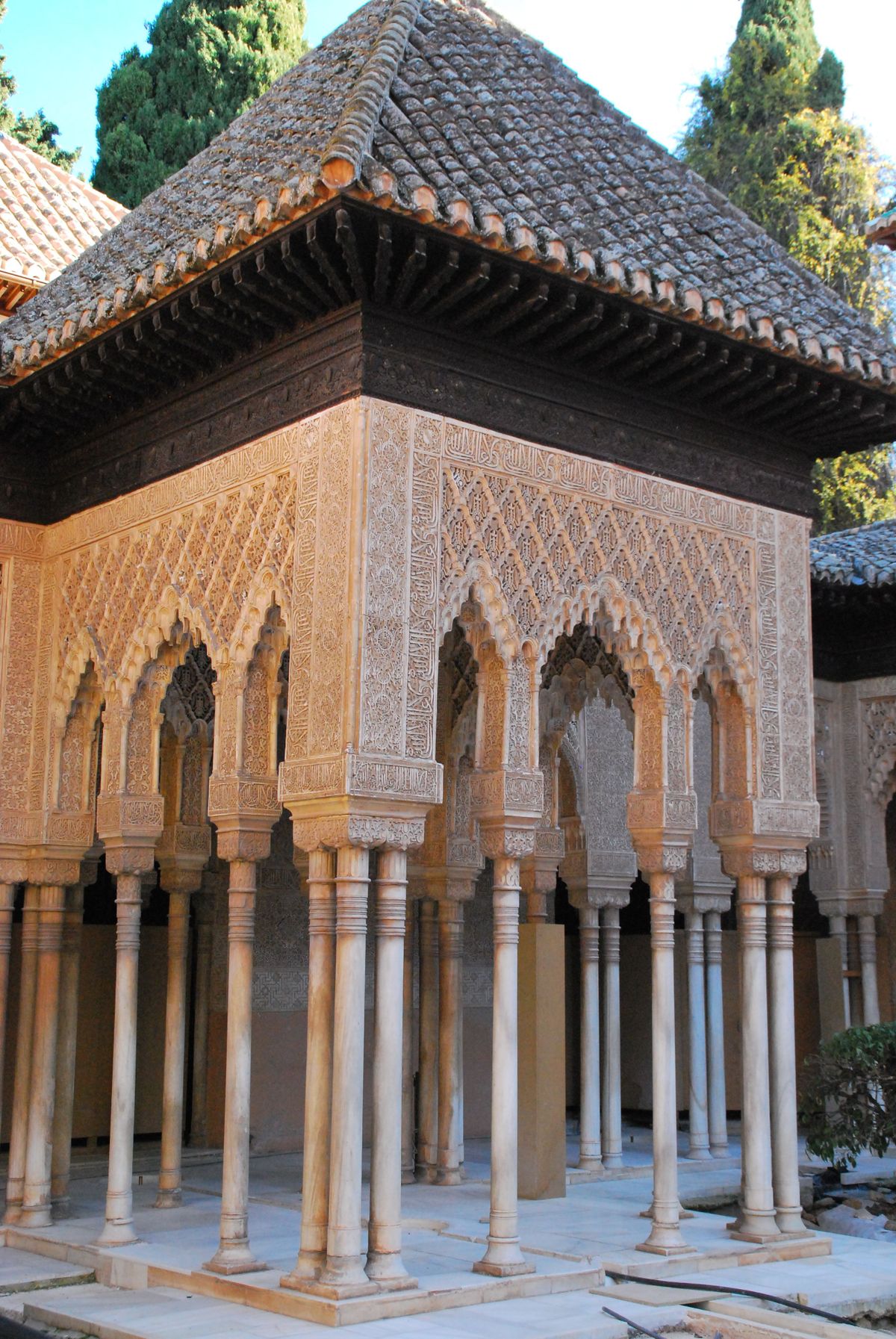
- The Nasrid Palaces: They are the heart of the Alhambra. The Palace of Comares, the Court of the Lions, the Hall of the Ambassadors… Every room is a masterpiece of stucco, tilework, and muqarnas that reflect the refinement of Andalusí architecture.
- The Generalife: The leisure estate of the Nasrid sultans, famous for its lush gardens, irrigation channels, fountains, and flower-filled courtyards such as the famous Court of the Main Canal.
- The Alcazaba: The military and oldest part of the fortress, from whose towers (such as the Torre de la Vela) you get stunning views of the city and the Albaicín.
- The Palace of Charles V: A surprising Renaissance building commissioned by Emperor Charles V after the Reconquista, which contrasts wonderfully with the Islamic architecture that surrounds it.
Tip: Buy your tickets months in advance. Capacity is limited and tickets sell out quickly, especially for the Nasrid Palaces, which have a strict entry time slot.
The Albaicín and the Sacromonte
Facing the Alhambra hill stretches the Albaicín, the city’s old Arab quarter, also a World Heritage Site. It’s a labyrinth of narrow streets, cobbled slopes, hidden squares, and cármenes (the typical Granada houses with a garden or orchard).
- Mirador de San Nicolás: The most iconic spot in the Albaicín. It offers the most famous (and most photographed) view of the Alhambra with the Sierra Nevada in the background, especially spectacular at sunset.
Climbing a little further brings you to the Sacromonte, Granada’s traditional gypsy quarter, famous for its cave-houses dug into the mountain and for being one of the cradles of flamenco art, where zambra shows can still be seen in the caves today.
The Historic Centre and the Cathedral
Beyond its Arab heritage, Granada’s centre holds a hugely important Renaissance and Baroque heritage.
- Granada Cathedral: The first Renaissance cathedral in Spain, a colossal and imposing work.
- The Royal Chapel: Attached to the Cathedral, it houses the tombs of the Catholic Monarchs (Isabella of Castile and Ferdinand of Aragon), who conquered the city in 1492.
- The Alcaicería: The old Arab silk market. Today, its narrow passageways are full of craft shops, spice stalls, tea houses, and souvenirs that will make you feel like you’re in a Moroccan souk.
The Free Tapas Culture
Granada is world-famous for its tapas culture. Unlike other Spanish cities, in the vast majority of Granada’s bars, with every drink (beer, wine, soft drink) you are served a generous free tapa.
These aren’t just a few olives or crisps. Granada tapas are generous portions that can range from meat in sauce, fried fish, migas, to mini burgers or paella.
- Recommended tapas areas: The area around Calle Navas, the streets near Plaza Nueva, the Realejo neighbourhood and the lower Albaicín, or the area around the Bullring. Going from bar to bar, paying only for your drink, is the best (and cheapest) way to have dinner in Granada.
Sierra Nevada: Snow Within Reach of the City
Less than an hour’s drive from central Granada lies the Sierra Nevada National Park, home to the southernmost ski resort in Europe. During winter and spring, you can be skiing in the morning and strolling through the historic centre or heading down to the beaches of the Costa Tropical in the afternoon.
When to Go and How to Get Around
- Best time: Spring and autumn are the ideal seasons. It gets very hot in summer, although nights are usually cooler than in the rest of Andalusia due to the altitude. Winter is perfect if you also plan to ski.
- Getting around: To explore the centre, the Albaicín, and to go up to the Alhambra, be prepared to walk (and climb hills). Wear comfortable shoes. Public transport in minibuses (popularly known as “Alhambras”) is very useful for connecting the centre with the Albaicín, the Sacromonte, and the Alhambra itself, as the streets are too narrow for regular buses.
Granada is a city you don’t forget. The Alhambra, the Albaicín at sunset, the free tapas. And the Sierra Nevada in the background, reminding you that here snow and sun coexist thirty minutes apart.
Complete your Andalusian route with the guides to Córdoba, Jaén (an hour away), and Málaga (an hour and a half).
Frequently Asked Questions
How far in advance do I need to buy Alhambra tickets? Between one and three months. In high season (spring and autumn) they sell out. Tickets are sold exclusively online on the official Alhambra website. Beware of resellers.
Can you visit the Alhambra for free? No. General admission costs €19. There are discounts for students, pensioners, and children.
Are tapas really free in Granada? Yes, in most bars in the centre and the Albaicín. You order a drink and they serve you a tapa without charging for it. They’re not just olives: they’re usually generous plates. There are areas where the tradition has weakened (very touristy streets), but in the bars the locals frequent it remains intact.